

Coughs are common in childhood, especially during respiratory infections. But a cough accompanied by wheezing, faster breathing, trouble feeding or reduced activity deserves more attention than an ordinary mild cold. Parents searching for a paediatrician near Indirapuram may be trying to work out whether their child needs monitoring, a same-day examination or emergency care. The decision depends on age, how the child is breathing and other symptoms—not simply how loud the cough sounds.
Le Crest Hospital has a Paediatrics & Neonatology department in Sector 4, Vasundhara, Ghaziabad. Families from Indirapuram, Vaishali, Kaushambi, Sahibabad and nearby NCR neighbourhoods can enquire about paediatric consultations. If a child is struggling to breathe, seek emergency help immediately rather than waiting for an outpatient booking.
Quick answer: when is a child’s cough or wheeze urgent?
The child’s breathing effort, colour, alertness, feeding and age matter more than the sound of the cough alone. New wheezing merits clinical advice, particularly in babies or children whose symptoms are worsening. Severe breathing difficulty is an emergency even without fever.
Emergency now: Blue or grey lips, marked chest recession, pauses in breathing, collapse, or difficulty waking.
Prompt or same-day assessment: New or worsening wheeze, poor drinking, dehydration signs, or breathing noticeably faster than usual. Babies under three months with a temperature of 38°C or more need urgent assessment.
Routine follow-up: A child who is breathing comfortably but has recurrent night cough or wheeze may need a planned paediatric review.
This is an information summary, not a substitute for examining the child. If you are unsure and the child appears unwell, seek urgent clinical advice.
What does wheezing sound like in a child?
Wheezing is usually described as a high-pitched whistling sound, often heard as the child breathes out. Parents may also notice faster breathing, unusual effort or a tight-sounding cough. Not every noisy breath is wheezing: sounds from the nose, throat or upper airway can be different. A child with a new sound should be assessed based on the whole clinical picture, including appearance, temperature, feeding and activity.
A cough may be dry, wet or barking, but the type of cough alone does not confirm the cause. Children can cough with a viral cold, irritation, asthma, allergies or other conditions. New wheezing can occur with infection or airway narrowing and sometimes needs prompt evaluation.
When breathing symptoms require emergency assessment
Get emergency care for severe difficulty breathing, marked pulling-in of the chest or between the ribs, pauses in breathing, blue or grey lips, collapse, unusual difficulty waking, or a child who seems dangerously unwell. Sudden coughing or breathing difficulty after choking, eating or playing with a small object also needs urgent assessment. A child who is too breathless to speak, cry or feed normally may be seriously unwell.
For emergency assistance in India, use the locally available emergency system; 112 is the nationwide emergency-response number. Do not continue reading or filling in an appointment form if a child has severe symptoms.
When should parents seek prompt, same-day medical advice?
Consider urgent advice when a child has new or persistent wheezing, worsening breathing effort, repeated vomiting with breathing symptoms, difficulty drinking, fewer wet nappies or signs of dehydration, or a concerning change in behaviour. A very young infant needs a lower threshold for assessment. A baby under three months with a temperature of 38°C or higher needs urgent medical evaluation, even if the main symptom appears to be a mild respiratory illness.
Parents sometimes ask whether a cough is “just viral.” It is safer to describe exactly what has changed—breathing, feeding, colour, temperature or alertness—than to make that assumption from home.
Why children cough and wheeze: common possibilities
Viral respiratory infections
Many childhood coughs begin with a runny nose or sore throat. A clinician evaluates whether symptoms are consistent with a self-limiting infection or whether there are signs suggesting a complication. Antibiotics are not automatically helpful for viral coughs and should not be started without a clinician’s recommendation.
Bronchiolitis in babies and toddlers
Bronchiolitis is a viral infection affecting small airways, seen particularly in children under two years of age. It can begin like a cold and progress to cough, noisy breathing or trouble feeding. Some infants require hospital in Ghaziabad assessment and supportive care. Risk varies with age and other medical conditions. Young babies with feeding difficulty, apnoea or breathing distress need urgent attention.
Asthma and recurrent wheezing
Some children have recurring episodes of cough, wheezing or breathlessness, particularly at night, during exercise or when respiratory infections occur. Asthma may be considered, but not every wheezing toddler has asthma. Diagnosis depends on age, symptom pattern, examination, medical history and sometimes tests where appropriate. A clinician can also review inhaler technique and a written treatment plan for a child already diagnosed with asthma.
Allergy, irritants and other causes
Exposure to smoke or other irritants can worsen respiratory symptoms. A child may also have allergic rhinitis or other triggers. Wheezing that begins suddenly after a food, medicine or insect sting, particularly with rash or swelling, may signal a serious allergic reaction requiring emergency care. A cough with a suspected inhaled object also should not be dismissed.
How parents can recognise increased work of breathing
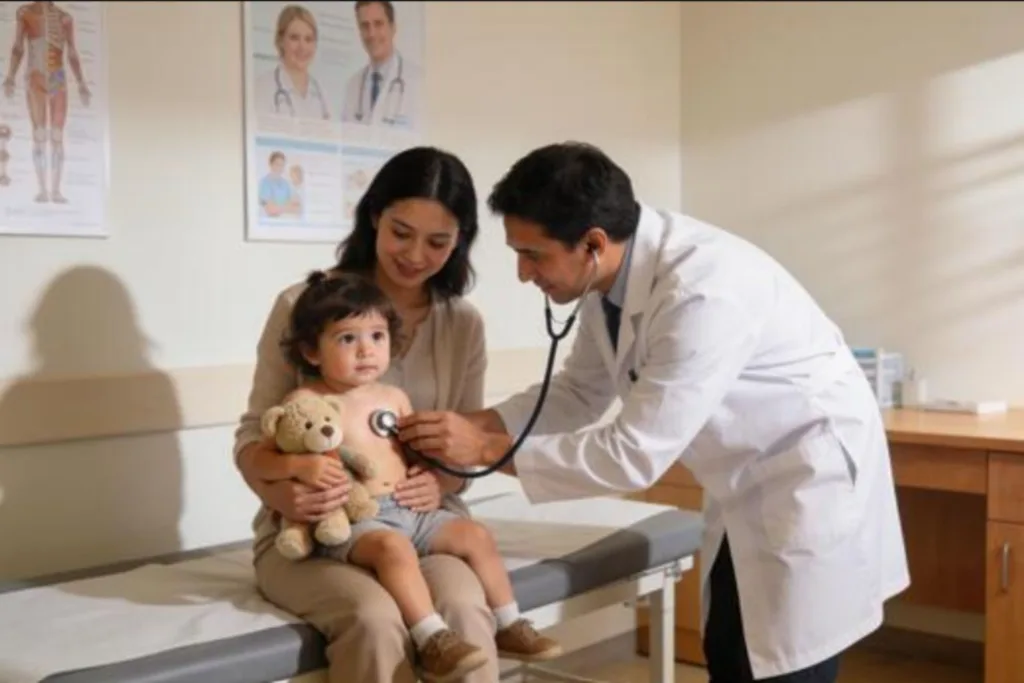
A child who is working hard to breathe may show signs beyond an audible whistle. Watch for unusually fast breathing when the child is calm, skin pulling inward between or below the ribs, flaring nostrils, grunting, inability to speak or cry as usual, or difficulty completing a feed. Changes in colour, alertness and activity are particularly important. A child can be seriously unwell even when the cough is quiet or there is no obvious fever. If severe distress is present, seek emergency help immediately.
When observing a child at home, compare their appearance with what is normal for that age and situation. Breathing naturally becomes faster with crying, physical activity and fever, so a single count without context may be misleading. Do not waste time trying to calculate a perfect respiratory rate when your child is struggling to breathe. If the chest seems to be pulling in with each breath, the child is becoming exhausted or you cannot get an adequate response, urgent assessment is more important than a home measurement.
For a child who is comfortable, a parent can tell the clinician whether the noise happens while breathing in, breathing out, or both, and whether it appears mainly at night or after running. These observations help describe symptoms but cannot diagnose asthma, bronchiolitis, pneumonia or an inhaled object on their own. If possible, record observations about feeding and urine output as well, especially in infants.
How treatment differs between a viral illness, bronchiolitis and asthma
The word “wheeze” describes a sound, not a single disease. In a young infant with a viral cold, bronchiolitis may affect small airways and cause feeding or breathing difficulties. Management is largely supportive and depends on the baby’s clinical condition; routine antibiotics, inhaled medicines or repeated imaging are not automatically appropriate. In an older child with repeated episodes, a clinician may consider asthma or episodic viral wheeze and evaluate the pattern over time. A suspected inhaled object, allergic reaction or serious bacterial illness calls for a different response.
Because the causes differ, a treatment that helped one child may be unnecessary or unsafe for another. Parents should not start leftover steroids, inhalers, antibiotics or nebulised medicines without instructions for that specific child. A paediatrician may monitor oxygenation, hydration and breathing effort, or direct the family to urgent hospital care when indicated. The decision is based on examination, not solely on the fact that a home recording contains wheezing.
These distinctions reflect guidance from the NHS and the National Institute for Health and Care Excellence on bronchiolitis. For patients, the key question is not “Which nebuliser should I buy?” but “What is causing my child’s symptoms, and what warning signs require immediate review?”
How a paediatrician evaluates cough and wheezing
The paediatrician generally asks about the child’s age, symptom onset, fever, prior wheezing, vaccination history, known allergies, exposure to smoke, medicines and fluid intake. The physical examination focuses on breathing rate and effort, listening to the chest, oxygenation where indicated, hydration and general appearance.
Not every child needs a chest X-ray, blood test or antibiotics. Tests and referral are chosen according to the clinical findings and suspected cause. Recurrent symptoms may require a planned follow-up to consider asthma, allergies or other respiratory conditions. A family should leave with instructions about medicines, warning signs and when to return.
What information should parents bring to an appointment?
Note when the cough started, how often it occurs, whether it disturbs sleep and whether the child can play and drink normally. Record any fever and medicines already given, including the dose. Mention previous breathing episodes and any prescribed inhaler or nebuliser treatment. If safe and the child is breathing comfortably, a short recording of a recurring sound may help the clinician understand what you heard—but it is not a substitute for examination.
What Ghaziabad families can note before a consultation
Air pollution, smoke and seasonal changes may irritate the airways, but they do not prove the cause of wheezing. Avoid assuming every episode is caused by the weather or pollution. Tell the clinician about smoke exposure, indoor irritants, recent infections, school or daycare contacts, recurrent night symptoms and any previous inhaler prescriptions. This background can support an accurate assessment without delaying emergency care.
Are inhalers, nebulisers and antibiotics interchangeable?
No. An inhaler delivers a prescribed medicine, sometimes through a spacer and mask depending on the child’s age. A nebuliser converts certain prescribed solutions into a mist. These are delivery devices, not diagnoses or universally suitable treatments. Correct dose, technique and the need for any medicine must be decided by the child’s clinician. Families whose child already has an asthma plan should follow that individual plan and seek urgent help if the medicine is not working as expected.
Antibiotics act against bacterial infections and do not treat ordinary viral colds or bronchiolitis. They may be prescribed when the clinician identifies a specific bacterial concern, but neither a cough nor wheezing alone justifies them. Ask what problem each medicine is intended to address, how to administer it safely, what side effects to watch for and when to stop or return. Do not use another child’s prescription as a guide.
Why young infants and children with other conditions need extra caution
Babies have smaller airways and may become tired or feed poorly during respiratory illness. Very young infants can sometimes have pauses in breathing without the dramatic wheeze that parents expect. Prematurely born babies, children with certain heart or lung conditions, and some children with reduced immunity may have a lower threshold for medical assessment. Tell the clinician about the child’s age at birth, previous hospital admissions, long-term medicines and any known underlying diagnoses.
In infants, feeding difficulty can be both a symptom and a practical risk. Fewer wet nappies, inability to complete feeds, unusual sleepiness or a rapidly worsening illness are reasons to contact a clinician urgently. A baby younger than three months with a temperature of 38°C or more requires urgent medical assessment. Do not delay because the cough does not sound severe. A parent’s impression that the child is markedly different from usual should be taken seriously.
Home care when a child is breathing comfortably
For a mild illness without warning signs, follow the treating clinician’s advice. Encourage fluids appropriate for the child’s age and continue usual feeding as tolerated. Saline nasal drops can sometimes help with a blocked nose in younger children when used appropriately. Keep children away from cigarette smoke and vaping aerosols. Rest and observation matter, but a child who starts breathing harder or drinking poorly needs reassessment.
Do not give honey to a child under one year of age. Avoid self-prescribing antibiotics, steroid medicines, nebulised drugs or someone else’s inhaler. Many over-the-counter cough and cold medicines are not recommended for young children; ask a qualified clinician before using them. Hot-steam inhalation can cause burns and is not a safe substitute for medical evaluation. For children already prescribed asthma medicine, follow their existing clinician-approved action plan and obtain help if it is not working.
How to know whether a cough needs follow-up
A cough can remain for a period after a respiratory illness, but symptoms that are persistent, recurring or getting worse merit review. Seek assessment if there is repeated night coughing, wheezing with activity, difficulty participating in normal play, poor growth, repeated chest infections or a recurring pattern that concerns you. The aim is to identify whether the child needs symptom relief, additional tests, a specialist referral or simply observation with a clear follow-up plan.
If fever is the main concern rather than wheezing, the hospital already has a separate child fever and paediatrician guide for Ghaziabad. This article concentrates on breathing-related symptoms rather than repeating that information.
What a useful follow-up and action plan should include
Before leaving a paediatric consultation, ask for a clear explanation of the suspected cause, any medicine actually prescribed, the expected course and the warning signs requiring re-evaluation. Families should know who to contact if the child becomes breathless after clinic hours or if food and fluid intake decline. If the child has an established asthma diagnosis, request an individual written action plan that explains medicine use, review appointments and when emergency help is needed.
For a child with repeated wheezing, a symptom diary can be useful. Note night coughing, exercise-related symptoms, missed school, exposure to smoke or other irritants, illnesses that preceded each episode and whether previous prescribed medicine helped. A diary is not a substitute for examination, but it can reveal patterns worth discussing. If the child is otherwise comfortable, ask when follow-up should occur rather than assuming the symptoms will always resolve on their own.
Do not send a struggling child on a long journey solely because a familiar specialist has a routine clinic. Urgent assessment should happen at an appropriate nearby emergency service when red-flag breathing symptoms occur. Location convenience matters for planned follow-up, but immediate safety matters more during breathing distress.
Choosing a paediatrician near Indirapuram or Vaishali
When searching online for the “best paediatrician in Indirapuram,” prioritize a clinician who examines the child, explains the diagnosis and gives clear escalation advice over promotional rankings. Ask about age groups seen, clinic schedule, follow-up arrangements and what happens if symptoms worsen after hours. Le Crest Hospital’s physical address is Budh Chowk, Sector 4, Vasundhara, Ghaziabad; it does not imply a separate Indirapuram branch.
The hospital’s best paediatrician in Ghaziabad page provides an overview of routine services. Families can also use the doctors directory to check currently listed paediatric clinicians, with appointment availability confirmed directly.
Frequently asked questions
1. Is wheezing the same as a normal cough?
No. Wheezing is a breathing sound associated with airflow through narrowed airways. A clinician should consider it alongside breathing effort and other symptoms.
2. Does a wheezing child always have asthma?
No. Viral infections, bronchiolitis and other conditions can cause wheezing. Recurrent patterns may need evaluation for asthma.
3. What if my child is breathing fast and the ribs are pulling in?
Seek urgent emergency assessment. Visible increased breathing effort can be a warning sign even without a high fever.
4. Can bronchiolitis affect newborns or small babies?
Yes. Infants can be more vulnerable to feeding and breathing difficulties and may require urgent medical assessment.
5. Should I start antibiotics for a cough?
Not without a clinician’s recommendation. Many childhood coughs are viral, and antibiotic treatment depends on the diagnosis.
6. Can I use another family member’s inhaler or nebuliser medicine?
No. Medication type and dose must be prescribed for the child, except when following that child’s own established treatment plan.
7. Does a cough lasting several weeks need a paediatrician?
Persistent, recurrent or worsening cough should be discussed with a clinician, especially when accompanied by wheeze, night symptoms or reduced activity.
8. Is honey safe for babies with cough?
No. Honey should not be given to children younger than 12 months because of the risk of infant botulism.
9. Where can families near Indirapuram request a paediatric consultation?
Le Crest Hospital offers paediatric services from its Vasundhara campus. For routine scheduling, use the hospital’s contact page and confirm the available consultant. For severe breathing symptoms, seek emergency care instead.