
Polycystic ovary syndrome (PCOS), renamed polyendocrine metabolic ovarian syndrome (PMOS) through an international consensus announced in May 2026, is a long-term hormonal condition that can affect ovulation, periods, skin, fertility and metabolic health. Common clues include irregular menstrual cycles, unwanted facial or body hair, acne and thinning scalp hair. A single ultrasound report, ovarian follicle appearance or AMH result cannot diagnose the condition by itself. Assessment and treatment depend on age, symptoms, other possible causes and personal goals.
Many people in India continue to search for PCOS, PCOD and PCOS treatment in Ghaziabad. Those familiar terms are used here to help patients find clear information, while also explaining the updated PMOS name. If missed periods, acne, unwanted hair growth or difficulty conceiving are concerning you, an assessment by a qualified gynaecologist can help identify the cause and decide whether treatment is needed.
Le Crest Hospital’s Obstetrics & Gynaecology department is located in Sector 4, Vasundhara, Ghaziabad, serving patients who travel from nearby Indirapuram, Vaishali, Kaushambi, Sahibabad and Delhi-NCR. This article provides general guidance, not a diagnosis or personal prescription.
PCOS vs PMOS: what changed in 2026?
On 12 May 2026, an international patient-and-professional consensus introduced the name polyendocrine metabolic ovarian syndrome (PMOS) for the condition previously called polycystic ovary syndrome (PCOS). The new terminology better reflects endocrine, metabolic, reproductive and psychological effects rather than implying that ovarian cysts define the disorder. A multiyear transition is underway; PCOS remains widely recognised in medical records, patient conversations and online searches.
The term PCOD remains common in India, but patients should not assume it describes a separate, standardised diagnosis with a different treatment protocol. Ask the clinician which findings are present and how the international diagnostic criteria apply. The ovaries may contain many small follicles; these are not the same thing as dangerous cysts that routinely require surgery.
Important: The name change does not mean everyone needs new tests or a different medicine. What matters is the evidence-based assessment and a plan suited to the person’s health and priorities.
What are the common symptoms of PCOS or PMOS?
Irregular, delayed or absent periods
Some people have widely spaced periods, unpredictable bleeding or several months without menstruation. Ovulation may be irregular, but pregnancy, thyroid disorders, stress and other hormonal conditions can also disrupt cycles. A clinician should evaluate persistent changes instead of assuming every missed period means PCOS.
Acne, unwanted hair or scalp hair thinning
Androgen-related changes may include persistent acne, thicker facial or body hair, or patterned scalp hair thinning. These findings differ widely between individuals. Sudden, rapidly worsening masculinising changes need prompt medical assessment for causes other than common PCOS/PMOS.
Challenges with ovulation or pregnancy
Some people with PCOS/PMOS ovulate less frequently and may take longer to conceive. PCOS does not mean permanent infertility. Many conceive naturally, while others benefit from fertility evaluation and individual treatment.
Metabolic and emotional health concerns
Insulin resistance, changes in blood glucose, blood pressure or lipids may occur even in people who are not overweight. Sleep difficulties, anxiety, low mood and body-image distress may also be relevant. These concerns deserve respectful, non-stigmatising discussion and appropriate care.
When should you consult a gynaecologist in Ghaziabad?
Consider booking an assessment when cycles stay irregular, periods are repeatedly missed, acne occurs alongside cycle changes, unwanted hair growth is progressing, or pregnancy is taking longer than expected. Do not postpone assessment solely because symptoms seem mild or weight is within a particular range.
Seek urgent medical care instead of a routine appointment for sudden severe pelvic pain, heavy bleeding with faintness, or severe pain/bleeding when pregnancy is possible. These symptoms need examination for emergencies such as an ectopic pregnancy or other acute conditions; they should not be attributed to PCOS without assessment.
For routine women’s healthcare, see the hospital’s Gynaecologist in Ghaziabad service page. This blog answers PCOS-specific questions, while that service page covers wider consultation and treatment choices.
How do doctors diagnose PCOS/PMOS?
Diagnosis begins with a medical history: menstrual cycle patterns, onset of symptoms, medication use, signs of androgen excess, pregnancy possibility, family history and metabolic concerns. The clinician may perform relevant examination and select tests to rule out similar disorders. No single scan or blood test is sufficient for everyone.
Diagnostic criteria in adults
After excluding other explanations, the internationally accepted approach generally requires two of three features:
- Irregular or absent ovulation, often indicated by persistently irregular menstrual cycles.
- Clinical or biochemical androgen excess, such as relevant hair-growth patterns or elevated androgens.
- Polycystic ovarian morphology, assessed using appropriate ultrasound criteria or, for suitable adults, AMH as an alternative method within the guideline algorithm.
If an adult already has irregular cycles and clinical or biochemical androgen excess, an ultrasound or AMH test is not automatically required for diagnosis. AMH must not be used as a stand-alone diagnostic test and indiscriminate testing can cause overdiagnosis.
Why adolescent diagnosis is different
Irregular cycles and acne can occur naturally during puberty. For adolescents, guideline-based diagnosis calls for both relevant menstrual irregularity (interpreted by time since the first period) and evidence of androgen excess, after other causes are excluded. Ovarian ultrasound appearance and AMH should not be used to diagnose adolescents. Those at risk but not meeting criteria may need follow-up over time rather than a premature label.
Which blood tests or scans might be needed?
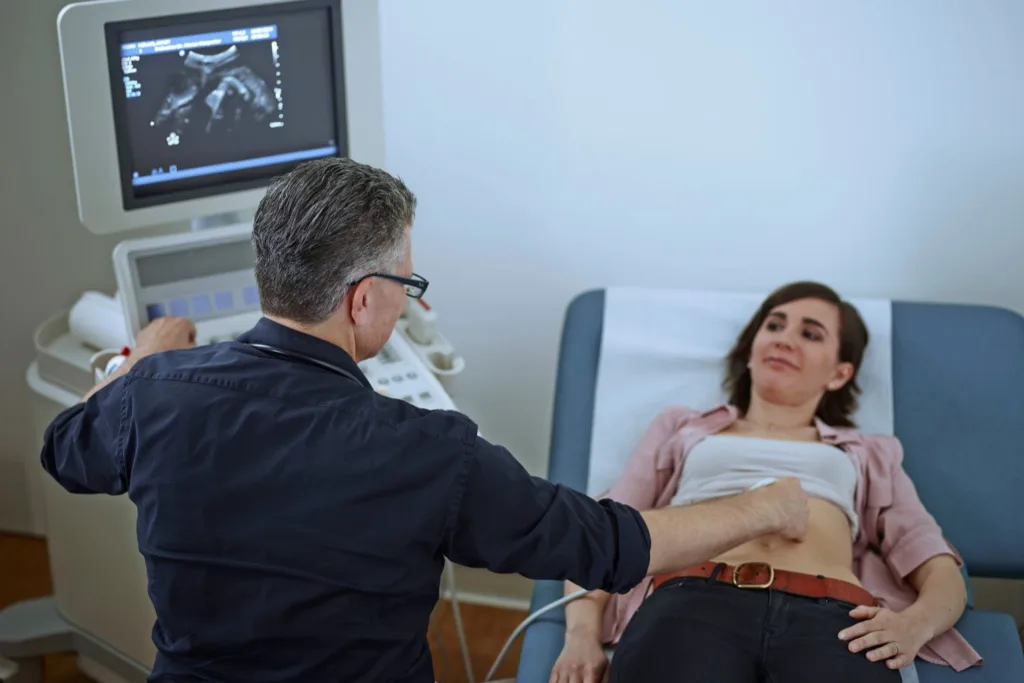
A clinician may consider pregnancy testing where relevant, thyroid or prolactin investigations, other endocrine tests when indicated and assessment of blood glucose, blood pressure and lipids. A 75-g oral glucose tolerance test may be considered for appropriate metabolic risk assessment according to clinical guidance. Testing is tailored to the individual; every patient does not need every hormone test or a repeated ultrasound.
PCOS treatment in Ghaziabad: care depends on your goals
PCOS/PMOS is a long-term condition with treatment options; it is not accurately described as having a guaranteed permanent cure. A personalised plan considers symptoms, medical history, contraindications, preferences and whether pregnancy is desired.
Goal 1: Manage irregular periods and protect endometrial health
When ovulation is infrequent, long gaps without periods may increase the risk of endometrial thickening in some patients. A gynaecologist may discuss cycle regulation, appropriate progestogen treatment or combined hormonal contraception for suitable people who are not trying to conceive. Such medicines have contraindications and should not be started or stopped without professional advice.
Goal 2: Address acne, excess hair growth and hair thinning
Management may involve skin or hair treatments alongside hormonal approaches where suitable. Anti-androgen medication is not appropriate for everyone and may carry pregnancy-related risks, so contraception and monitoring must be discussed when such treatment is considered. Visible improvements in unwanted hair often take time; quick-fix promises are not reliable.
Goal 3: Support metabolic and cardiovascular health
Evidence-based care may include assessment of glucose status, blood pressure, lipid levels, sleep and other cardiovascular risk factors. Sustainable activity, balanced nutrition and adequate sleep help overall health, but there is no single proven PCOS diet for everyone. A clinician may consider metformin for selected patients, particularly for metabolic indications; it is not automatically prescribed to all patients. Support should avoid blaming people for their weight.
Goal 4: Support fertility when pregnancy is a priority
Your clinician may assess ovulation and other potential fertility factors, discuss preconception health and offer referrals or treatment according to need. International guidance identifies letrozole as a first-line ovulation-induction medicine for selected patients with anovulatory PCOS infertility and no other fertility factors, but its use requires medical assessment, monitoring and attention to local prescribing rules. It should never be self-prescribed.
Goal 5: Address emotional well-being and quality of life
Concerns about periods, acne, hair growth, fertility and weight can affect confidence or mental health. Anxiety and depression screening may be appropriate and referral for psychological support can be part of care. A good treatment plan listens to what matters most to the patient rather than relying on an identical regimen for everyone.
Can you get pregnant naturally with PCOS or PMOS?
Yes. Many people with PCOS/PMOS conceive naturally. Some need help identifying ovulation, addressing other fertility factors or using monitored fertility treatment. Irregular periods do not prove that pregnancy is impossible.
Because the condition is associated with a higher likelihood of certain pregnancy complications, a preconception consultation may include discussions about glucose health, blood pressure, nutrition, medicines and pregnancy monitoring. No online article can decide an individual’s conception chances. The hospital’s Obstetrics & Gynaecology specialists can explain appropriate consultation pathways.
Long-term PCOS follow-up: why one consultation may not be enough
Follow-up is not limited to checking whether a menstrual period has arrived. Depending on the person, the gynaecologist may reassess:
- Menstrual regularity and whether prolonged gaps require treatment.
- Glucose status, blood pressure, cholesterol and other metabolic risks at appropriate intervals.
- Skin and hair symptoms, medicine tolerance and treatment goals.
- Sleep, emotional wellbeing and possible symptoms of sleep apnoea.
- Pregnancy plans and any changes to medicines or clinical priorities.
Very long intervals without periods should be discussed because persistent unopposed oestrogen exposure may increase the risk of endometrial hyperplasia. The absolute risk of endometrial cancer remains low and routine screening for every asymptomatic person is not advised; individual decisions are made by the treating clinician.
What should you bring to your first PCOS/PMOS appointment?
Before your appointment, write down the dates of recent menstrual periods; any acne, hair or weight changes; possible pregnancy; all current medicines and supplements; previous scan or blood-test reports; family history of diabetes; and whether your immediate priority is cycle control, skin symptoms, metabolic health or pregnancy.
Useful questions to ask include: Which criteria do I meet? What other conditions have been excluded? Which tests are necessary for me? What are the benefits and risks of treatment? When should I follow up? This supports a shared, informed decision rather than a one-size-fits-all plan.
Routine appointment CTA: Book a gynaecology consultation or message the hospital on WhatsApp for appointment availability. WhatsApp is not intended for urgent pelvic pain, heavy bleeding or suspected pregnancy emergencies.
Gynaecologists at Le Crest Hospital, Vasundhara, Ghaziabad
The hospital’s current doctors directory and public profiles list:
Dr. Pragati Aggarwal – MBBS, MS, DNB, FMAS, MNAMS, Senior Consultant, Obstetrics & Gynaecology. Her published profile covers menstrual concerns, PCOS management, pregnancy and gynaecological care.
Dr. Abhivyakti Kapoor – MBBS, MS, FMAS, Senior Consultant, Obstetrics & Gynaecology. Her published profile discusses PCOD/PCOS, menstrual conditions, fertility concerns and pregnancy care.
Both profile links are provided so patients can review published credentials and clinical interests. The Hospital in Ghaziabad should confirm current consultation schedules and availability of any particular diagnostic or treatment service at booking.
PCOS consultation near Indirapuram, Vaishali and Delhi-NCR
Le Crest Hospital is located at Budh Chowk, Plot No. 13, Maharaja Agarsain Marg, Sector 4, Vasundhara, Ghaziabad, Uttar Pradesh 201012. Patients may travel here from Indirapuram, Vaishali, Kaushambi, Sahibabad and neighbouring areas. The hospital is in Vasundhara, not a separate clinic in those neighbourhoods. Choose a clinician based on qualifications, clinical fit, communication and continuity of follow-up rather than unverified “best doctor” claims.
Common myths about PCOS and PMOS
“PCOS is only about ovarian cysts.” No. Its effects can involve hormones, metabolism, reproduction, skin and psychological wellbeing; the 2026 name update reflects this.
“My ultrasound shows follicles, so I definitely have it.” No. Ultrasound findings alone are insufficient for diagnosis.
“Only people with higher body weight develop PCOS.” No. People across the weight spectrum can be affected.
“Everyone needs an AMH test.” No. AMH has a limited role for selected adults and is not a diagnostic test for adolescents.
“Irregular periods mean I will never conceive.” No. Fertility varies and treatment options exist when needed.
“A detox or supplement cures PCOS permanently.” There is no established one-off cure and treatment claims require reliable evidence. Discuss supplements and medicines with a clinician.
Frequently asked questions about PCOS/PMOS in Ghaziabad
1. Has PCOS officially been renamed PMOS in 2026?
Yes. An international consensus announced polyendocrine metabolic ovarian syndrome (PMOS) as the new name in May 2026. A transition period is underway, so PCOS remains widely used in searches and clinical conversations.
2. Is PCOD different from PCOS or PMOS?
PCOD is a commonly used Indian term, but the internationally standardised syndrome is now referred to as PMOS, previously PCOS. A doctor should explain your actual diagnostic findings rather than rely on the label alone.
3. What are the early signs of PCOS?
Irregular periods, persistent acne, increased facial or body hair and scalp hair thinning are possible clues. Similar symptoms can have other causes, so assessment matters.
4. Can someone have PCOS without being overweight?
Yes. PCOS/PMOS occurs across body sizes. Metabolic health assessment can still matter when weight is within the expected range.
5. Is ovarian ultrasound compulsory for diagnosis?
No. For adults with both irregular ovulation and androgen excess, ultrasound may not be needed. It is not recommended to diagnose adolescent PCOS from ovarian appearance alone.
6. Is AMH a stand-alone PCOS test?
No. AMH may help assess ovarian morphology in certain adults within a structured diagnostic approach, but it should not be used alone or for adolescent diagnosis.
7. Can PCOS be cured permanently?
No guaranteed permanent cure has been established. Symptoms, reproductive concerns and long-term risks can often be managed with individualised treatment and follow-up.
8. Can women with PCOS conceive naturally?
Yes. Many conceive naturally, while others need ovulation evaluation or fertility support. The most suitable plan depends on individual factors.
9. What long-term tests or follow-up may be needed?
Depending on personal risk, clinicians may reassess menstrual cycles, blood pressure, glucose status, lipids, medicines and emotional wellbeing. Follow-up frequency is individual.
10. Where can I discuss PCOS treatment in Ghaziabad?
Le Crest Hospital’s Gynaecology department is in Sector 4, Vasundhara, Ghaziabad. The published doctors include Dr. Pragati Aggarwal and Dr. Abhivyakti Kapoor; confirm appointment availability first.

Book a PCOS/PMOS consultation in Ghaziabad
If you are concerned about irregular menstrual cycles, acne with hormonal symptoms, unwanted hair growth, or questions about ovulation and fertility, contact Le Crest Hospital or call +91 95825 78821.
Urgent care reminder: Sudden severe pelvic pain, significant bleeding with dizziness or fainting, or pain/bleeding when pregnant or possibly pregnant warrants urgent medical evaluation, not a routine booking.