
A cataract develops when the eye’s natural lens becomes cloudy. For many adults, it gradually makes everyday activities such as reading, recognising faces or seeing clearly in bright sunlight harder. An eye examination—not a search result-can confirm whether a cataract is responsible for the change in vision. If you are comparing eye specialists in Ghaziabad, understanding the examination and the questions to ask about treatment can help you make an informed appointment.
At Le Crest Hospital, the Ophthalmology & Eye Care department is based in Sector 4, Vasundhara, Ghaziabad. Patients from Indirapuram, Vaishali, Sahibabad and nearby Delhi-NCR areas can enquire about a consultation. The availability of cataract surgery, specific diagnostic tests and lens options should always be confirmed with the hospital before booking.
Cataract in brief: the answer patients need
A cataract is clouding of the eye’s natural lens. It usually causes gradual blur, glare or trouble seeing at night. An ophthalmologist can examine the lens, check for other eye diseases and advise whether updated spectacles, monitoring or surgery makes sense for you. A sudden vision change is not a symptom to watch at home.
First step: Book an eye examination if vision changes gradually or daily tasks are affected.
Possible tests: Vision and glasses-power assessment, slit-lamp examination and other tests as clinically indicated.
Surgery decision: Based on functional difficulty, eye health, benefits, risks and personal goals—not advertising claims.
Urgent symptoms: Sudden vision loss, a curtain-like shadow, severe pain or new flashes need prompt assessment.
What is a cataract, and how does it affect vision?
The natural lens sits behind the coloured part of the eye and helps focus light on the retina. With cataract, proteins within the lens change and light becomes scattered instead of passing through clearly. Ageing is a common factor, but cataracts can also be associated with eye injury, some medications, diabetes or other conditions. Not everyone develops symptoms at the same rate.
A cataract does not spread from one person to another. It can affect one or both eyes, and each eye may progress differently. New spectacles, brighter reading light or reduced glare may help for a period, but glasses do not remove the clouded lens. An ophthalmologist can determine whether a cataract is present and whether another eye condition also needs attention.
Early cataract symptoms that deserve an eye check
Common changes include progressively blurred or hazy vision; difficulty reading small print; glare or halos around lights; trouble driving at night; colours seeming duller; frequent prescription changes; and occasional double vision in one eye. Some people notice that they need brighter light for reading. These symptoms do not establish the diagnosis because dry eye, changes in glasses power, glaucoma, retinal problems and other conditions may produce overlapping complaints.
Is sudden blurred vision a cataract symptom?
Sudden loss or rapid deterioration of vision should not be assumed to be a routine cataract. New flashes of light, a curtain-like shadow, marked eye pain, significant redness or a sudden visual change needs urgent medical assessment. The hospital’s existing guide to sudden blurred vision and eye pain explains why some symptoms should be treated differently from slowly progressing cataracts.
What happens at an eye specialist consultation?
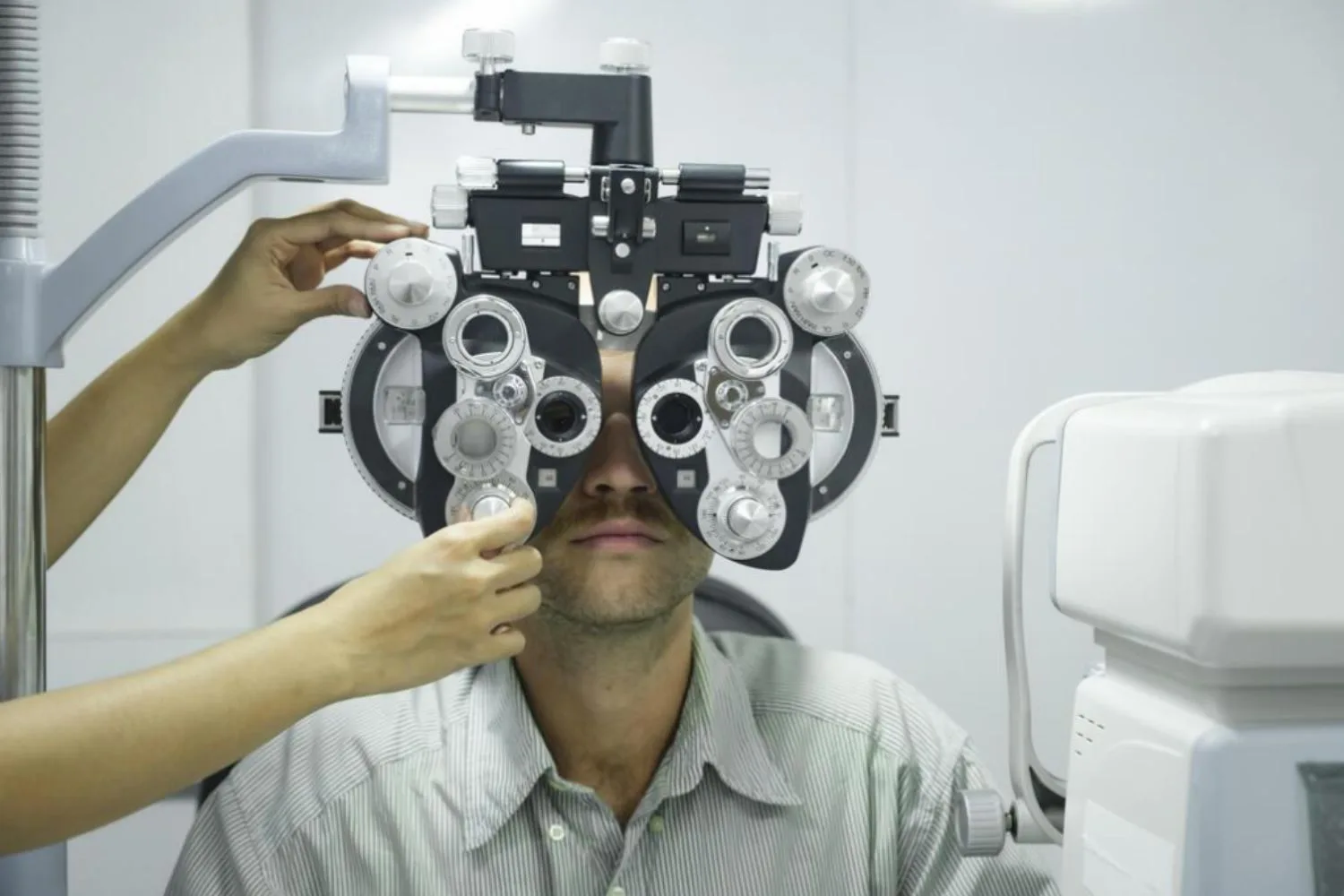
The ophthalmologist usually asks how vision has changed and which activities are affected. The assessment may include the following, depending on symptoms and examination findings.
Vision and refraction assessment
A visual acuity chart checks how clearly a person can see at different distances. Refraction helps assess whether an updated glasses prescription may improve vision. These results are considered alongside the patient’s real-world difficulties—not in isolation.
Examination of the lens and other eye structures
A slit-lamp examination helps the eye specialist assess the lens and structures at the front of the eye. Dilating drops may be recommended so the clinician can examine the back of the eye and look for other problems. A patient whose vision is reduced by both cataract and a retinal condition needs different counselling from someone whose lens clouding is the main cause.
Measurements if an operation is being considered
If cataract surgery seems appropriate, the surgeon may request measurements of the eye to calculate an intraocular lens (IOL) power. Additional imaging or other tests may be necessary when the cornea, retina or eye pressure requires further evaluation. Do not assume that every test or implant type is available at every centre; ask the treating team what is required in your case.
When is cataract surgery considered?
For adults, surgery is often considered when the cataract interferes with daily life, safety or important tasks and the likely benefits outweigh the risks. A person who struggles to read, work, walk safely or see well enough for required activities may benefit from discussing surgery. There is generally no need to wait for a cataract to become extremely advanced before asking for an evaluation; equally, a small cataract that causes little difficulty may be monitored.
An eye specialist should explain how much visual improvement is realistically expected. Existing glaucoma, diabetic retinal disease, age-related macular changes or corneal problems can influence the outcome. The decision should also take account of overall health, the other eye, personal preferences and the ability to attend follow-up appointments.
Understanding lens choices without the marketing promises
Cataract surgery typically replaces the clouded natural lens with an artificial intraocular lens. Lens design can affect expectations for spectacles after surgery, but no lens guarantees perfect sight or complete freedom from glasses.
Monofocal lenses
A monofocal lens is generally set to prioritise a particular focusing distance. Patients may still need spectacles for reading or other distances. It can be a sensible option for many people, but suitability is determined through examination and discussion.
Toric and other specialist lens designs
A toric lens may help manage suitable astigmatism. Other lens designs may aim to extend the range of usable vision but can involve trade-offs such as glare, halos, contrast considerations, cost or suitability issues. The ophthalmologist should explain expected benefits and limitations in language you understand. These categories describe general options, not a claim that Le Crest offers every design.
How diabetes and other eye conditions influence cataract planning
A cataract is not necessarily the only reason a person sees poorly. People living with diabetes may also have changes in the retina, while glaucoma, age-related macular degeneration, dry-eye disease or corneal problems can affect the picture. Two people with similarly cloudy lenses may therefore have different surgical recommendations and different expectations for sight after treatment. The ophthalmologist needs to explain what can reasonably improve and what may remain unchanged.
For someone with diabetes, it is useful to bring the most recent medical information and mention any history of retinal treatment. The eye specialist may need to evaluate the back of the eye more carefully, sometimes using retinal imaging if indicated. A physician may also help review wider health issues before an operation. This does not mean that diabetes automatically rules out cataract surgery; it means the decision should account for more than the lens alone.
Ask whether each eye has the same problem, whether other eye conditions need treatment first, and what follow-up is planned if more than one diagnosis is present. The most meaningful outcome is a realistic improvement in useful vision, not a promise that a particular lens or machine will give everyone perfect sight.
What happens before, during and immediately after cataract surgery?
The process usually begins before the operating day. An ophthalmologist confirms that the visual symptoms are consistent with cataract, reviews the examination and orders measurements used to select an artificial lens. The team also discusses existing medicines, allergies, prior eye operations and any medical conditions relevant to the procedure. Instructions on food, drink, prescribed drops and medicines vary with the clinical plan. Patients should follow their own treating team’s directions instead of copying someone else’s surgery preparation routine.
During a typical operation, the surgeon removes the cloudy natural lens and places an intraocular lens in the eye. Local anaesthetic or numbing treatment is commonly used, but the exact approach is a clinical decision. The procedure may be performed as day care where facilities and patient circumstances permit. The patient should understand who will operate, where the procedure will occur and what assistance or transport may be needed afterwards. These general steps are described by the National Eye Institute; they do not confirm which techniques are available at a particular hospital in Ghaziabad.
Before discharge, request written instructions covering prescribed drops, eye protection, hygiene, activity, follow-up and warning symptoms. If the team advises an escort because of dilation, medication or vision changes, plan for one. Never drive home after a procedure unless the treating clinician explicitly confirms it is safe.

What can patients expect at postoperative follow-up?
Some blur or mild discomfort may occur during early healing, but the expected course depends on the patient and procedure. The purpose of follow-up is not only to measure vision: the eye-care team also checks that healing is progressing as expected, discusses medicines and asks about pain, redness or new changes. Keep the dates given by your surgeon even if vision seems better quickly.
Report increasing pain, a sudden or substantial fall in sight, flashes, new floaters, unusual redness or any other warning sign identified in your discharge instructions. Such changes should not wait for a scheduled visit. The same urgency applies when symptoms develop after an otherwise uncomplicated start to recovery. Avoid rubbing the operated eye or stopping prescribed drops early without specific advice.
A useful question is when it is reasonable to return to screen work, cooking, exercise, dusty environments and travel. The answer cannot be reduced to one universal number of days. It depends on healing, the work involved, other eye conditions and any complications. The clinic should also explain whether and when a new glasses prescription may be considered.
Can vision become cloudy again after a cataract operation?
Patients sometimes hear the phrase “secondary cataract” and assume the original cloudy lens has returned. The natural cataract does not grow back after removal. However, the thin capsule that supports the artificial lens can become cloudy later, a condition called posterior capsule opacification. An eye specialist can evaluate this and discuss treatment if it is affecting vision. Do not self-diagnose late blur as capsule clouding: retinal disease, dry eye, changes in glasses power and other causes also need consideration.
These distinctions help patients understand why later symptoms still deserve examination even if an earlier operation was successful. They also show why postoperative follow-up is part of the care pathway rather than an optional afterthought.
What to ask before booking cataract surgery in Ghaziabad
Is cataract the main reason for my blurred vision, or is another condition involved?
Can better spectacles or monitoring help for now?
Which tests do I need, and which will be billed separately?
What lens type is recommended for my eyes, work and everyday routine?
Which surgeon will perform the procedure, and where will it take place?
What complications, warning signs and follow-up visits should I understand?
What is included in the written estimate: lens, tests, medicines and follow-up?
Do not choose solely on a “best eye hospital” claim, advertised equipment or price. Confirm the physician’s qualifications and the actual centre where the proposed procedure is performed. Le Crest’s doctors directory can help you locate the hospital’s listed ophthalmology clinicians; availability should be checked directly.
What results should an eye assessment explain?
Before leaving a consultation, ask for a plain-language summary of what was found, whether the cataract explains your symptoms, and whether another eye condition needs treatment or monitoring. If surgery is suggested, request a written explanation of the expected visual benefit, lens choice, likely use of glasses and postoperative review schedule. A second opinion can be reasonable when the benefits or alternatives are unclear.
Preparing for your appointment and any planned surgery
Bring current spectacles, previous eye reports, a list of prescribed medicines, relevant medical history and questions you want to discuss. Tell the team about diabetes, blood thinners, allergies, previous operations and eye drops. Do not stop medicines or begin fasting without the treating team’s instructions. You may need someone to accompany you after dilating drops or a procedure, depending on the plan and your vision.
If an operation is selected, the team should provide written instructions covering medicines and eye drops, arrival arrangements, activity restrictions and follow-up. Recovery varies. Increased pain, a significant drop in vision or other warning symptoms after a procedure require prompt contact with the treating team rather than waiting for the next routine visit.
A practical cataract consultation checklist for families
When an older family member has gradually worsening sight, relatives can help by documenting specific problems: reading medicine labels, recognising faces, walking in dim corridors, negotiating steps and managing essential daily tasks. Avoid assuming that someone who says their vision is “fine for their age” has no practical difficulty. Conversely, do not pressure a person into an operation solely because a scan or examination notes a cataract.
A useful written plan records the diagnosis in each eye, the reason for any recommended tests, available choices, approximate expected benefit, the follow-up schedule and the circumstances requiring urgent contact. If written costs are provided, compare what they include rather than comparing a single advertised starting figure. Bring existing glasses and relevant previous reports. A patient who is uncertain about lens options, costs or anticipated visual outcomes can ask for another explanation or a second qualified opinion.
For appointments involving another person’s support, check whether dilating drops may temporarily affect near vision or light sensitivity. This is a practical reason to arrange transport where advised and to avoid making a tightly scheduled day depend on immediate return to normal tasks.
Choosing an eye specialist near Indirapuram or Vaishali
A useful appointment is one where the doctor identifies the cause of symptoms, explains reasonable choices and documents the next step. Le Crest Hospital is in Vasundhara, Ghaziabad, not a separate branch in Indirapuram or Vaishali. When enquiring, confirm the ophthalmologist’s OPD schedule, what diagnostics are available on the day and whether the proposed intervention is carried out at that site.
Frequently asked questions
1. Can cataracts go away with eye drops?
No eye drop has been established as a routine replacement for cataract removal. Drops may treat another eye condition, but the cloudy lens itself is not cleared by ordinary medication.
2. How do I know if I need cataract surgery?
An eye specialist evaluates the lens, other eye conditions and how much symptoms affect daily activities. An examination is necessary before making that decision.
3. Is cataract surgery needed as soon as a cataract is diagnosed?
Not always. Many people can monitor a mild cataract, provided follow-up and safety considerations are addressed.
4. Is blurred vision always caused by cataracts?
No. Prescription changes, retinal disease, glaucoma, dry eye and other problems can affect vision. A sudden change needs urgent assessment.
5. Can someone with diabetes have cataract surgery?
Many patients with diabetes can be evaluated for surgery, but diabetic eye disease and overall medical control may influence tests, timing and outcomes.
6. Will I still need glasses after a cataract operation?
Possibly. The answer depends on lens selection, healing, existing eye conditions and the visual tasks that matter to you.
7. How long does recovery take?
Recovery differs between individuals. Your surgeon should give a personalised plan for eye drops, driving, work and follow-up rather than promising a fixed number of days.
8. What if I develop severe pain or worsening vision after surgery?
Contact the treating eye service urgently or seek emergency care. Do not wait for a routine review when symptoms are severe or rapidly worsening.
9. Where can I request an eye assessment in Ghaziabad?
Le Crest Hospital lists Ophthalmology & Eye Care at Sector 4, Vasundhara. Confirm the specialist, timing and procedure availability through the hospital’s appointment page.